
1. What Is Traditional CRM?
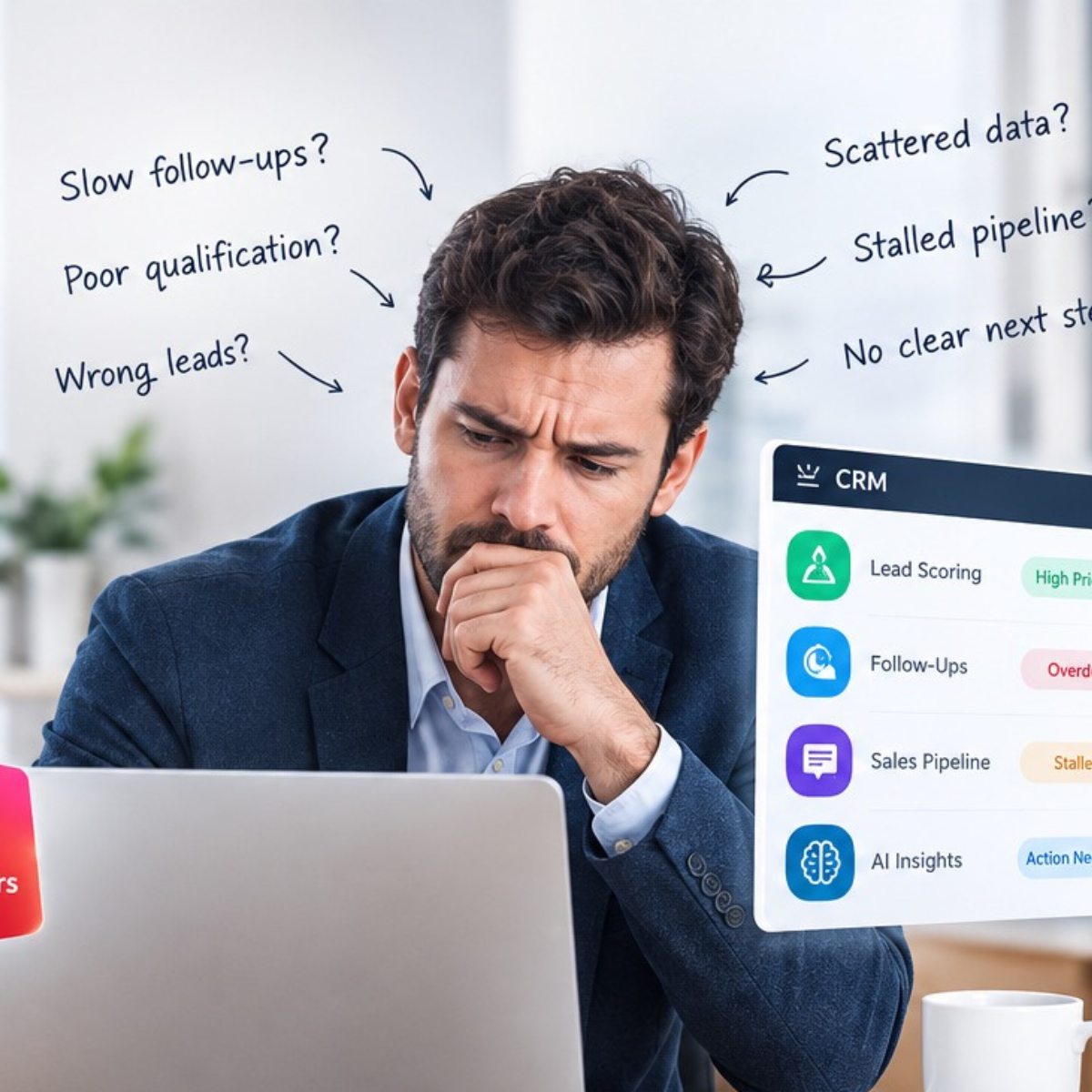
Businesses today generate leads from websites, social media, email campaigns and multiple marketing channels. However, managing those enquiries, following up with prospects and converting them into customers can be challenging.
Traditional Customer Relationship Management (CRM) software has helped businesses organise customer information, manage sales pipelines and maintain customer relationships. But as businesses grow, simply storing customer data is no longer enough.
Modern B2B companies need smarter solutions to automate sales processes, understand customer behaviour, prioritise leads and improve business performance.
This is where AI-powered CRM is transforming customer relationship management.
But what is the difference between traditional CRM and AI-powered CRM? And how can businesses benefit from making the switch?
Let's explore.
1. What Is Traditional CRM?
Traditional CRM software helps businesses manage customer information, sales activities and communication from one centralised platform.
It allows sales teams to store contact details, track customer interactions, manage opportunities and monitor sales performance.
Common traditional CRM features include:
- Contact and company management
- Lead and opportunity tracking
- Sales pipeline management
- Customer communication history
- Task and appointment management
- Email integration
- Basic reporting and dashboards
Traditional CRM systems provide structure and help businesses reduce their dependence on spreadsheets and manual record-keeping.
However, many traditional CRM platforms still require employees to manually update customer records, qualify leads, schedule follow-ups and analyse sales reports.
As the number of customers and enquiries increases, these repetitive activities can reduce sales productivity.
2. What Is AI-Powered CRM?
AI-powered CRM combines traditional customer relationship management with artificial intelligence, intelligent automation and data analysis.
Instead of simply storing customer information, an AI-powered CRM can analyse available data and provide insights that support business decisions.
Key capabilities include:
- AI-powered lead scoring and qualification
- Automated follow-ups and workflows
- Customer behaviour analysis
- Conversation and buying-intent analysis
- Sales forecasting and pipeline insights
- Intelligent customer segmentation
- Automated reporting and recommendations
For example, when a potential customer submits an enquiry, AI can analyse the available information, identify potential buying signals and help the sales team prioritise the opportunity.
This reduces repetitive work and allows sales professionals to spend more time building customer relationships and closing deals.
3. Traditional CRM vs AI-Powered CRM: Key Differences
The main difference is how customer information is used.
Traditional CRM focuses primarily on organising and tracking customer activities, while AI-powered CRM adds intelligent analysis, automation and recommendations.
| Traditional CRM | AI-Powered CRM |
|---|---|
| Manual lead management | AI-assisted lead qualification |
| Manual follow-ups | Automated follow-up workflows |
| Basic customer records | Intelligent customer insights |
| Standard reporting | AI-assisted analytics |
| Manual sales prioritisation | Intelligent lead scoring |
| Activity tracking | Conversation and intent analysis |
| Limited predictive insights | AI-supported sales forecasting |
Both approaches can help businesses manage customers. However, AI-powered CRM offers additional capabilities for organisations looking to improve sales efficiency and customer engagement.
4. Five Challenges AI-Powered CRM Can Help Solve
1. Missed Follow-Ups and Lost Opportunities
Delayed responses can cause potential customers to lose interest or choose a competitor.
AI-powered CRM can support automated reminders, follow-up scheduling and customer engagement workflows, helping sales teams maintain consistent communication.
2. Poor Lead Qualification
Not every enquiry represents a genuine sales opportunity.
AI-powered lead scoring can analyse available customer information and engagement signals to help identify high-priority prospects.
This allows sales teams to focus their attention on more promising opportunities.
3. Scattered Customer Information
Customer details often exist across spreadsheets, emails, WhatsApp conversations and different business applications.
A centralised CRM brings customer information, communication history and sales activities together, giving teams a clearer customer picture.
4. Disconnected Sales and Marketing
Marketing teams generate enquiries, while sales teams manage opportunities and close deals.
When both departments work with disconnected information, understanding campaign performance and lead quality becomes difficult.
Integrated CRM and marketing automation can connect these activities and improve visibility across the customer journey.
5. Limited Sales Visibility
Business leaders need to understand pipeline performance, upcoming opportunities and potential revenue.
AI-assisted reporting and sales analytics can help identify patterns, monitor performance and highlight opportunities that require attention.
5. Essential Features to Look for in AI CRM Software
Choosing the right CRM software is important for long-term business growth. B2B companies should consider platforms offering:
- Intelligent Lead Management: Capture, organise, qualify and prioritise enquiries.
- Sales Automation: Automate repetitive activities, reminders and follow-ups.
- Customer 360°: Access customer details, company information and interaction history.
- Sales Pipeline Management: Track opportunities and monitor deal progress.
- Marketing Automation: Manage campaigns, lead capture and customer engagement.
- AI Conversation Intelligence: Analyse customer conversations, buying intent and objections.
- Business Intelligence: Access dashboards, performance reports and actionable insights.
- Integration Capabilities: Connect email, calendars, communication channels and existing business applications.
The right AI CRM should support your current business processes while providing flexibility to grow.
6. How MetaLink Vision Is Bringing CRM and AI Together
At MetaLink Vision, we believe customer relationship management should go beyond storing contacts and tracking sales activities.
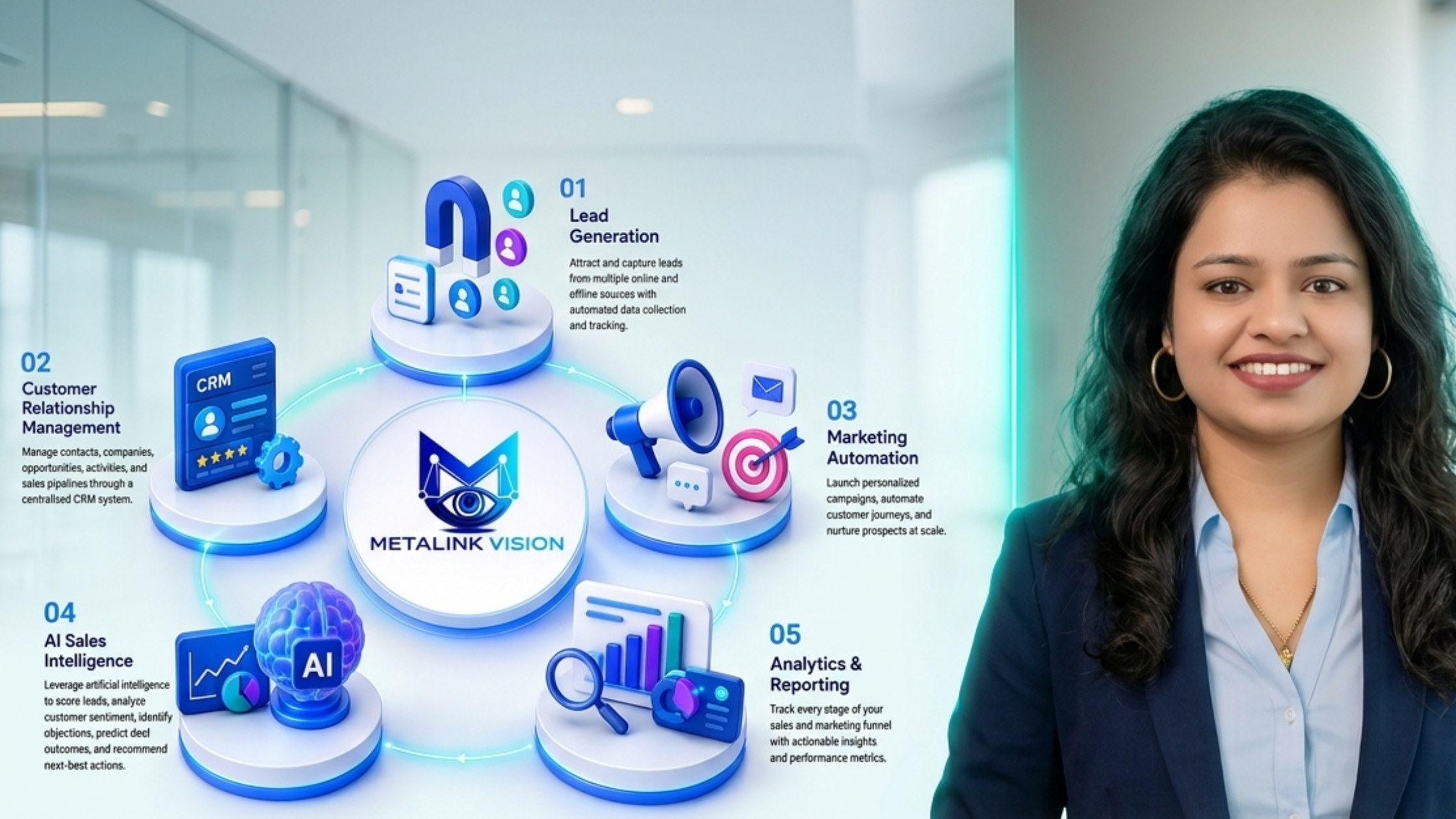
Our AI-powered CRM platform brings together customer management, sales automation, marketing intelligence and AI-driven insights to help B2B businesses manage their customer journey more effectively.
Our key capabilities include:
AI-Powered Lead Management: Capture enquiries from multiple channels, qualify prospects and prioritise potential opportunities.
Sales Automation: Manage follow-ups, tasks, reminders and workflows to reduce repetitive manual activities.
Customer 360°: Bring customer information, company records, communication history and activities together.
Sales Intelligence: Gain insights into sales opportunities, customer engagement and pipeline activities.
Marketing Automation: Manage campaigns, customer engagement and lead generation activities.
AI Conversation Intelligence: Understand customer intent, objections and potential opportunities through conversation analysis.
SEO and AI Search Intelligence: Support digital visibility through technical SEO and AI search insights.
By connecting these capabilities, MetaLink Vision aims to help businesses improve productivity, strengthen customer relationships and make smarter business decisions.
Is Your Business Ready for Smarter CRM?
Traditional CRM has helped businesses organise customer relationships for many years. However, modern B2B businesses increasingly need intelligent tools that go beyond customer databases and basic reporting.
AI-powered CRM offers opportunities to improve lead qualification, automate sales processes, connect marketing activities and gain deeper customer insights.
The future of CRM is not just about managing customer information. It is about using that information intelligently to create better business opportunities.
Ready to move beyond traditional CRM?
Discover how MetaLink Vision brings CRM, sales automation, marketing intelligence and AI together in one connected platform.
MetaLink Vision – Smarter CRM. Clearer Vision.
Website: https://metalink.vision
Capture. Qualify. Engage. Convert. Grow.