
The Problem: Compliance Built for Enterprises, Not You
Is Your Website Secretly Breaking GDPR? This Tool Finds Out in Seconds
If you run a small business in the UK, there's a good chance your website is quietly breaking GDPR right now — and you have no idea.
Maybe it's a marketing tracker firing before a visitor accepts cookies. Maybe it's a contact form collecting emails with no privacy policy in sight. Maybe your "privacy policy" is a template you copy-pasted in 2019 and never looked at again. None of this feels urgent — until the ICO sends a letter, or a customer asks a question you can't answer.
This is the exact gap AlgoGrass, a UK RegTech startup, is trying to fill.
The Problem: Compliance Built for Enterprises, Not You
GDPR doesn't care how big your business is. But most of the tools built to handle it do. Enterprise compliance platforms come with enterprise price tags, enterprise onboarding, and enterprise complexity — none of which makes sense for a five-person consultancy or a local online shop.
The result? Small businesses either ignore compliance and hope for the best, or pay a solicitor a few hundred pounds every time something needs updating. Neither is sustainable.
The Fix: Scan First, Ask Questions Later
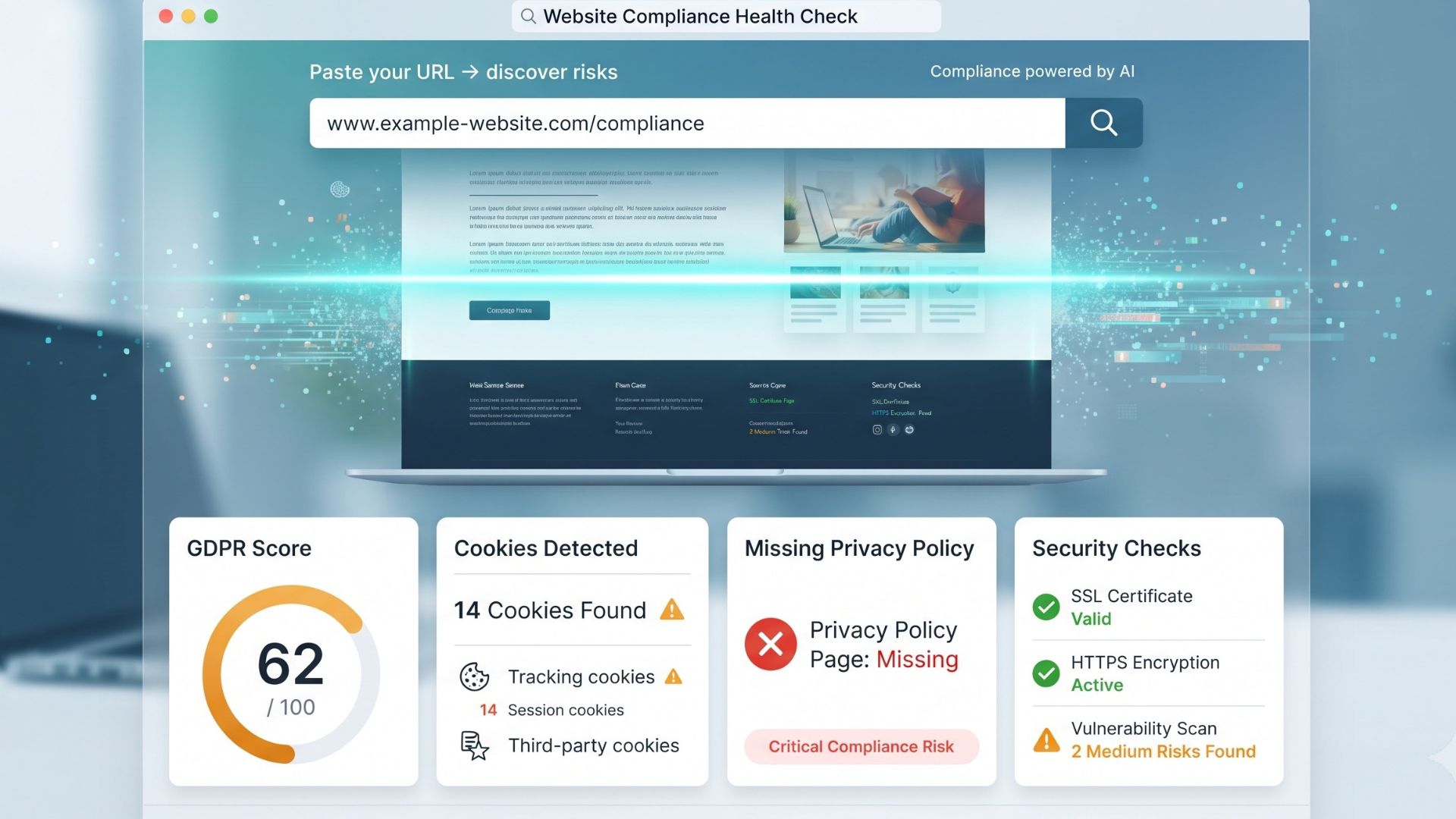
AlgoGrass flips the process. Instead of starting with a questionnaire or a legal consultation, you start with your URL.
Paste your website address in, and the tool scans it for the things regulators actually look for:
- Trackers and cookies running without proper consent
- Data-collecting forms (sign-ups, contact forms, checkouts)
- Whether HTTPS and basic security are in place
- Whether any cookie-consent mechanism exists at all
Within seconds, you get a compliance score and a severity-ranked list of what's wrong — no jargon, no guesswork.
From Score to Solution
Finding the problem is only half the job. AlgoGrass also generates the documents most small businesses are missing entirely: a privacy policy, a cookie policy, and a Data Processing Agreement, all tailored to what the scan actually found on your site — rather than a generic template that doesn't match what you do.
There's a dashboard to track your score over time, a remediation checklist so you know what to fix next, and even an AI assistant you can ask plain-English questions like "do I need consent for Google Analytics?"
A Healthy Dose of Reality
To be clear-eyed about it: AlgoGrass isn't the only tool doing this, and it says so itself — it's explicitly not a law firm. Similar scan-and-generate tools exist (iubenda, Termly, Termageddon, among others), and the UK's Information Commissioner's Office even offers its own free privacy notice generator for small organisations.
What AlgoGrass is betting on isn't novelty — it's making the whole loop (scan, generate, monitor, re-scan) fast enough and cheap enough that busy small-business owners actually use it, instead of putting compliance off for another quarter.
You don't need to become a GDPR expert to run a compliant website. You just need five minutes and a URL. Whether AlgoGrass or one of its competitors is the right fit for your business, the real takeaway is this: if you haven't scanned your site in the last year, it's worth finding out what's hiding in plain sight.